1st Annual: In-Person Health Mentors Symposium in Victoria
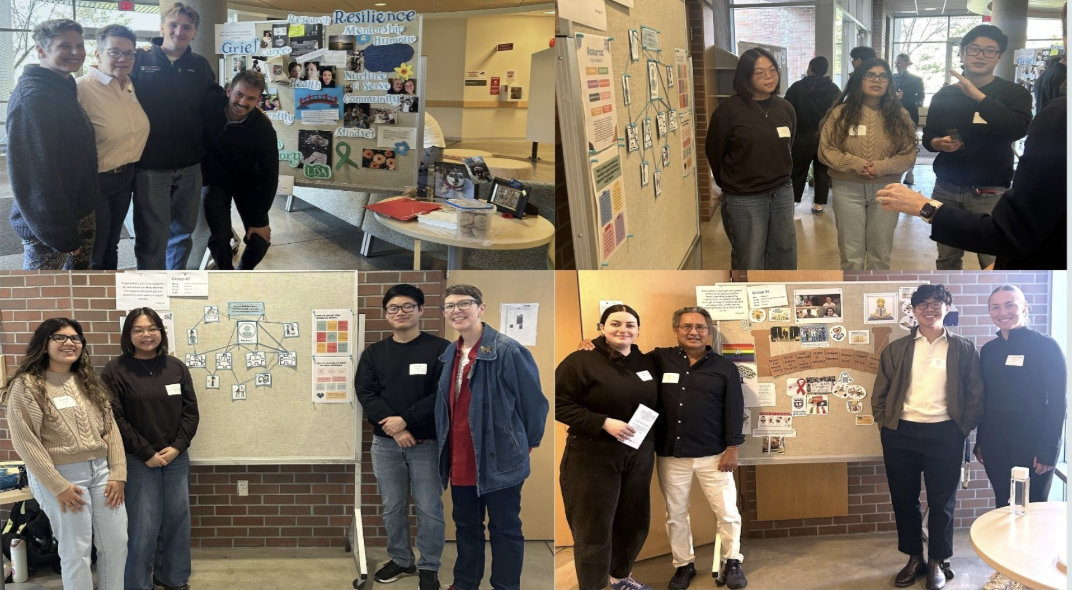
On March 30th, the Interprofessional Health Mentor Program Symposium in Victoria brought together students from Medicine, Physical Therapy, and Speech-Language Pathology/Audiology, along with their Patient Partners, for a meaningful day of reflection and shared learning.
A key focus of the Victoria site was helping clarify the distinction between the Health Mentor Program and the First Patient Program, and how each contributes differently to student learning. The Health Mentor Program was highlighted as complementing second-year medical training through sustained, relationship-based engagement with Health Mentors. This helped deepen understanding of how long-term connection shapes learning in ways that one-time encounters cannot.
As one student shared:
“I was blown away how my mentor so openly shared their experiences—it moved me from having a birds-eye view of a patient’s experience to a deeply moving understanding of their experience.”
One Health Mentor reflected:
“I was so excited to be part of this program for the first time. Switching from mostly research and quality improvement involvement to the organic Health Mentor Program is so refreshing. I can’t wait to come back next year!”
The momentum from the event extended beyond the day itself. Following the symposium, Dr. Laura Farrell, Regional Associate Dean, Vancouver Island, Faculty of Medicine, University of British Columbia (UBC) & Academic Director, Vancouver Island, UBC Distributed Programs, University of Victoria, connected with Dr. Christie Newton, Associate Vice-President Health, UBC, to begin conversations about potential opportunities to expand the program at the Victoria site—an exciting indication of growing interest and alignment.
Shona McLaren, Department of Physical Therapy, continues to champion the program, including involving a current student to share their experience with future cohorts. The Victoria symposium was a clear reflection of how relationship-based learning can deepen understanding and create momentum for patient-centred care.